scratch dash スクラッチダッシュ ベータ beta v1.0
Scratch Dash ベータ: When Japanese Precision Meets Geometry Dash Simplicity
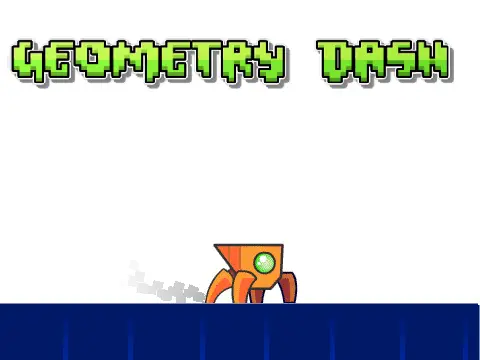
Okay, let's talk about this weird little gem I found while browsing geometry dash online games. It's called "Scratch Dash スクラッチダッシュ ベータ" - yes, the title is half English, half Japanese, which should tell you everything about its charmingly hybrid nature. Created by someone who admits they "made this work by watching griffpatch's YouTube," it's a perfect example of how the Geometry Dash community spreads across languages and cultures.
The developer's notes read like a growth diary written in two languages. Day 1: 62 references (they use question marks like they can't believe it). Day 2: 78 references. Day 3: "104 references! I'm so happy." Day 5: "296 references!?" There's this palpable excitement in the Japanese text - "めっちゃ嬉しい" (super happy) - that you just don't see in more polished, commercial games. It's raw, it's genuine, and it makes you want to root for the creator.
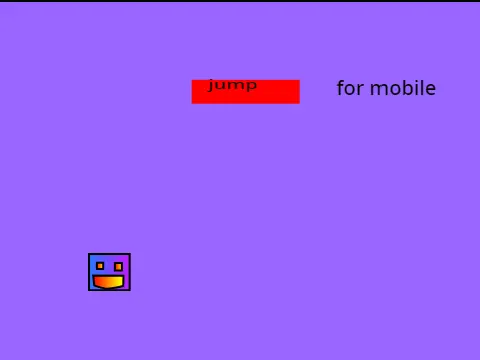
🎮 操作方法 CONTROLS (It's beautifully simple):
• タップまたはスペースキー (Tap or Space key!)
• That's literally it - one-button gameplay
• 制作時間: 3 days (they worked really hard!)
• They call it their 最高傑作 (masterpiece)
• Even better than their ジオメトリーダッシュクリッカー (Geometry Dash clicker)
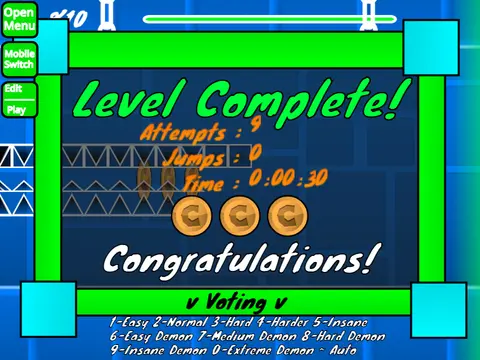
• They want you to tell them how many attempts you managed!
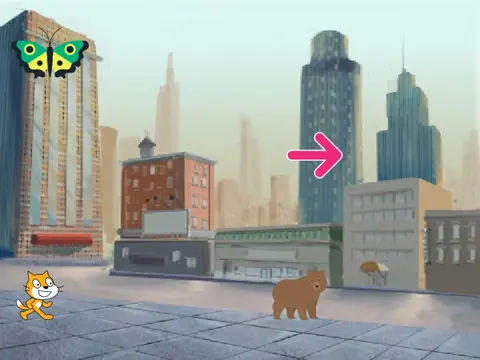
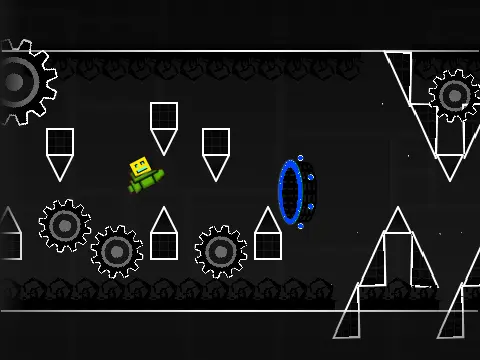
The credits section is a love letter to the Scratch community. Music from geometry dash subzero press start. Portal mechanics borrowed from another project (https://scratch.mit.edu/projects/897663189). Background and ground from griffpatch_tutor. Even the flying mechanic references yet another project. This isn't stealing - it's community collaboration, remixing, and building on each other's work, which is exactly what Scratch was designed for.
Which brings me to an interesting question about game design: "Can Geometry Dash help improve real-world timing/coordination skills?" With simple games like this, I think the answer is yes, but in a different way. Official Geometry Dash teaches you to sync with complex music and handle multiple game modes. Games like Scratch Dash teach you the fundamentals of rhythm and reaction time without the overwhelming complexity. It's like learning piano with simple melodies before tackling concertos.
The creator proudly states they worked on this for three days and it's their めっちゃ頑張った (super hard work) masterpiece. There's something about that time frame - three days - that feels significant. Not a weekend project, not a month-long endeavor, but three solid days of focused creation. You can almost imagine them staying up late, watching griffpatch tutorials, testing, tweaking, getting excited as the reference count climbs.
Now here's a fascinating thing about playing games made by non-native English speakers. The Japanese description has this wonderful phrase: "飛べるやつ" which literally means "the thing that can fly." Not "flying character" or "flight mechanic" - just "the thing that can fly." It's descriptively accurate while being charmingly vague. I love finding little linguistic quirks like this in fan games.
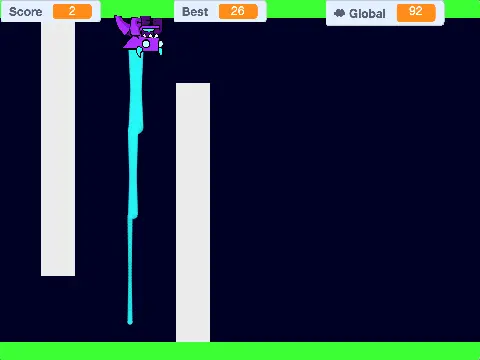
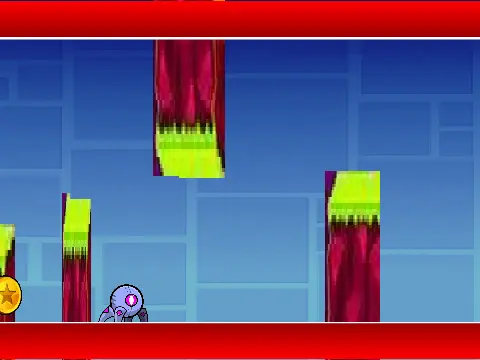
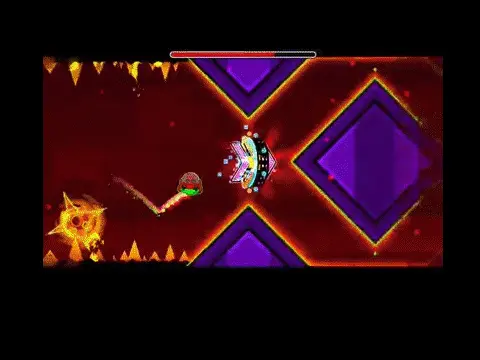
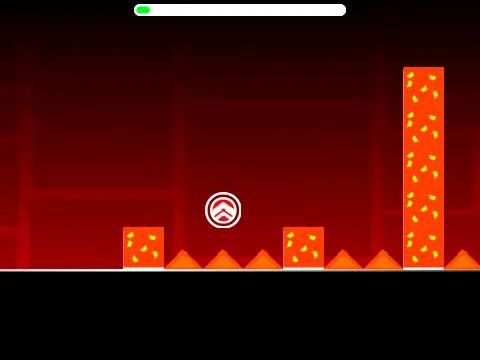
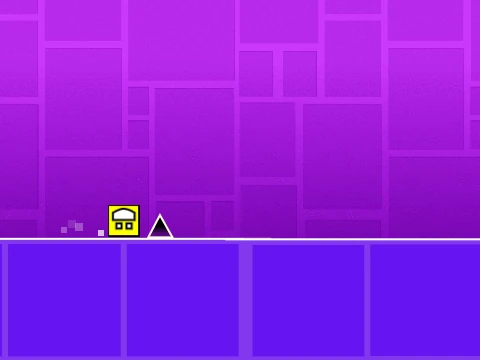
Another question players often have: "What transferable skills does Geometry Dash gameplay develop?" With Scratch-based games specifically, you're developing pattern recognition in its purest form. No fancy graphics, no complex hitboxes - just geometric shapes moving in predictable patterns that you need to navigate. It's visual mathematics, and games like this make that connection explicit by stripping away everything non-essential.
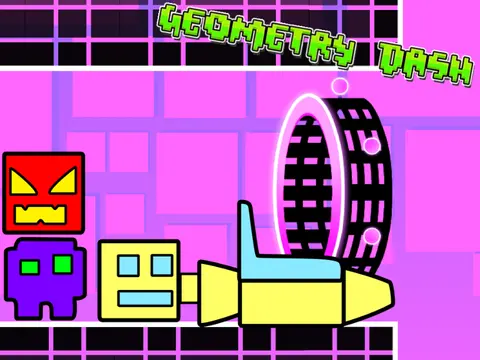
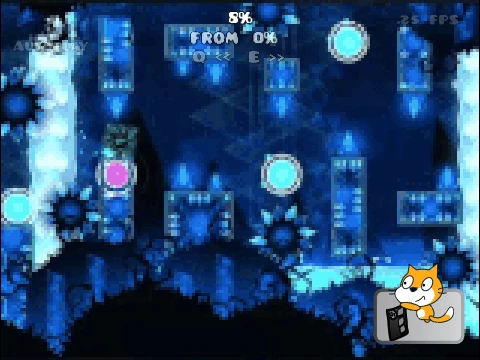
The game uses the press start music from Geometry Dash Subzero, which is a nice touch. That track has a specific rhythm that experienced players will recognize instantly. It creates this weird cognitive dissonance where your brain knows the music from one context but is applying it to completely different gameplay. Makes you wonder if the creator chose it because they loved Subzero specifically or just because it was available.
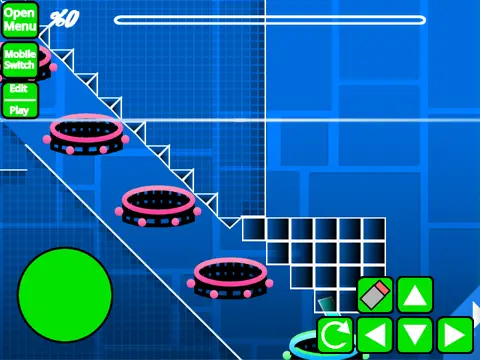
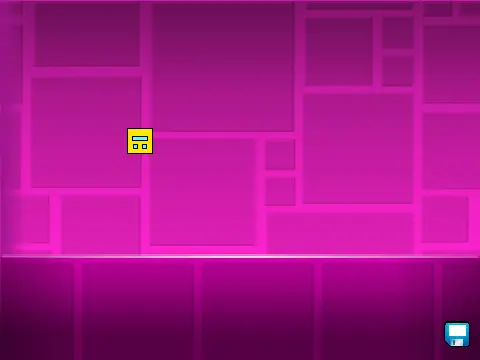
I tried playing with maximum visual aids in mind - really focusing on hitboxes and trails, even though the game probably doesn't have those features officially. It changes how you approach simple games. Instead of just reacting, you start analyzing the geometric patterns, predicting spawn points, looking for the underlying mathematical rules. Turns a casual time-waster into a puzzle.
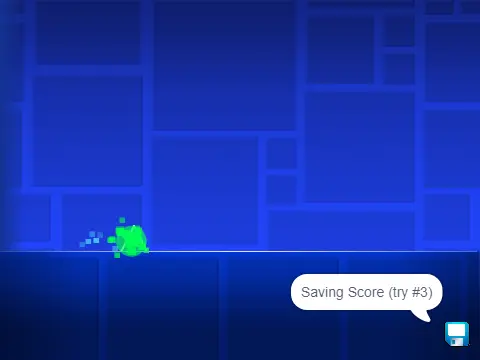
Final question worth considering: "Can Geometry Dash help with attention/focus improvement?" Games like Scratch Dash are perfect for this. They're simple enough that you can play them while waiting for downloads (as the variable suggests), but they require enough focus that you can't just zone out completely. It's that sweet spot between mindless distraction and intense concentration.
What I appreciate most about Scratch Dash Beta is its honesty. The creator doesn't pretend it's a professional game. They tell you exactly how long it took (3 days), what resources they used (griffpatch tutorials), and even share their excitement about the growing reference count. In an age of hyper-polished indie games, there's something refreshing about a project that feels like it was made by a real person learning as they go.
So if you're looking for a geometry dash lite online experience that feels authentic, slightly rough around the edges, and carries the enthusiasm of its creator in every line of code (and description), give this one a try. And maybe, like the creator asks, tell them in the comments how many attempts you managed. Who knows - you might be helping them reach 300 references.
Cultural note: The mix of English and Japanese in the interface creates a unique international gaming experience. It's like playing a game that exists between two languages, which somehow feels appropriate for Geometry Dash's global community.





Discuss geometry dash